Qualitative data has never fit into buckets for me. I understand why people use that terminology, but the enormous flaw in that metaphor is that a drop of water can only sit in one bucket at a time and there’s no easy translation for more complex models. My dissertation data felt wiggly. Whenever I closed my eyes, I saw my major themes intertwining - like octopus tentacles!
Nonetheless, I was trained for buckets, so I kept beating my head against the data trying to force it into buckets.
THIS IS YOUR PERMISSION TO GO OUTSIDE THE BUCKET SYSTEM.
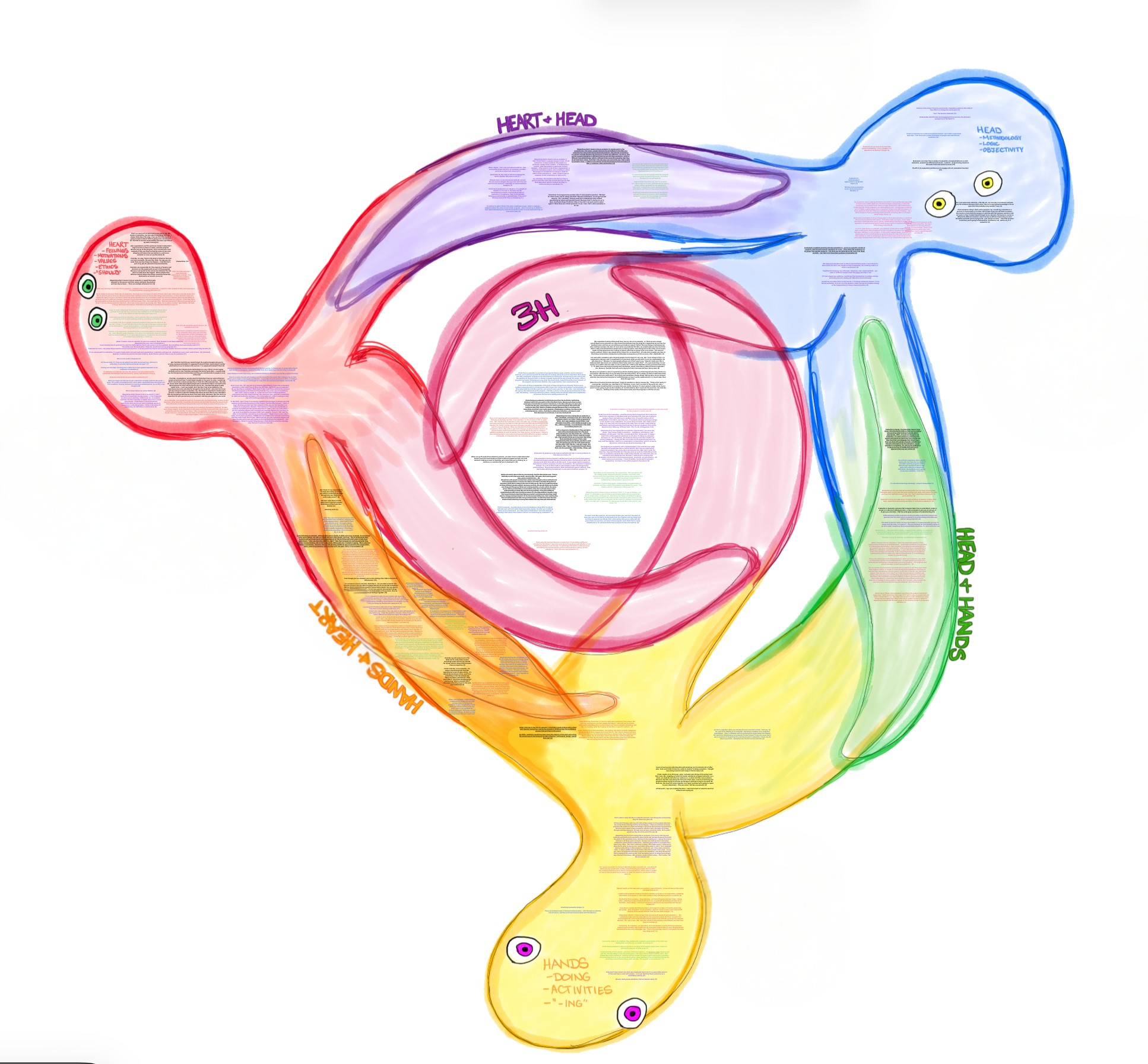
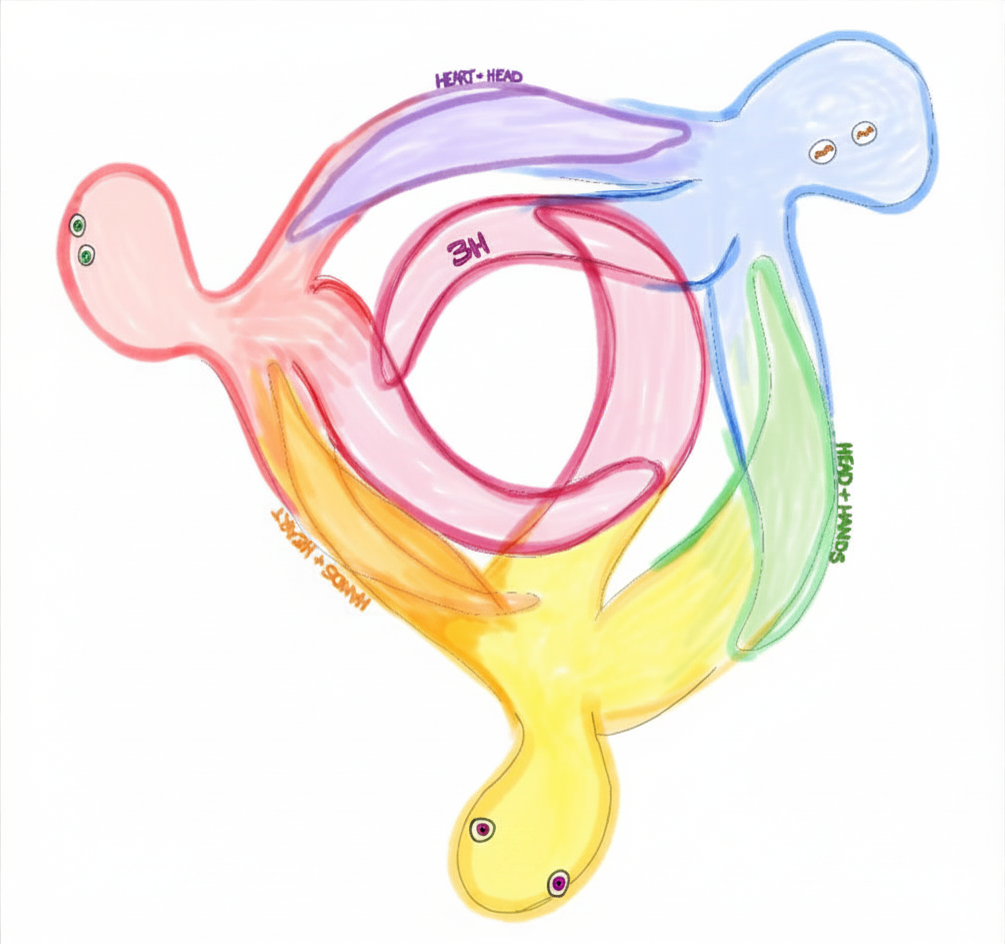
By drawing the framework how I saw it, color coding both the themes and the qualitative data (by speaker), I was finally able to truly examine how everything fit together and articulate it to an audience!
Not coincidentally, this also started my use of octopuses in my work.
I used this shape and color template to develop my qualitative codebook - at which point I learned that the colleague doing my inter-rater reliability check is NOT a visual processor.
Oh well, I was going to have to put my codebook into table format for the dissertation anyway. ¯\_(ツ)_/¯
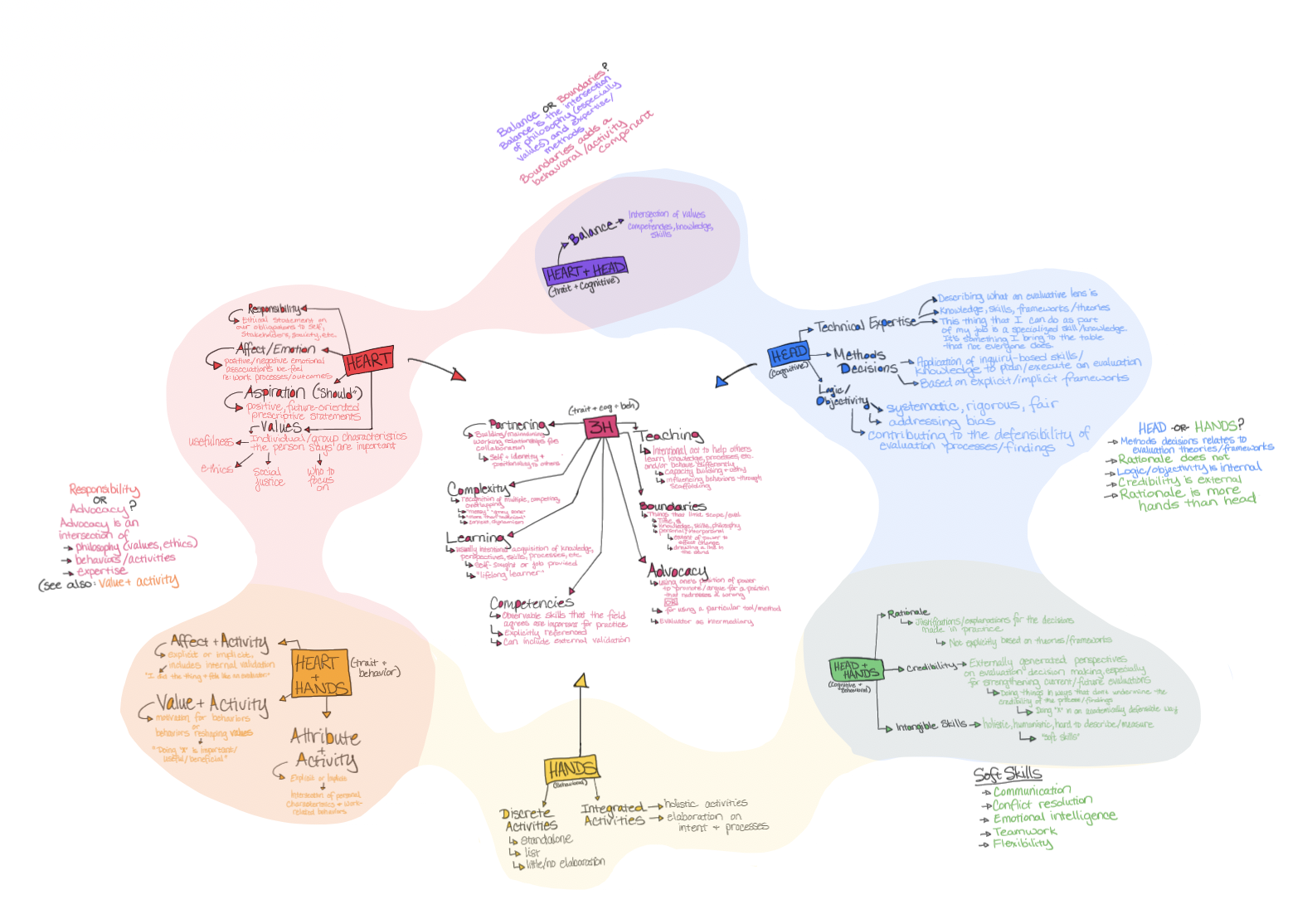
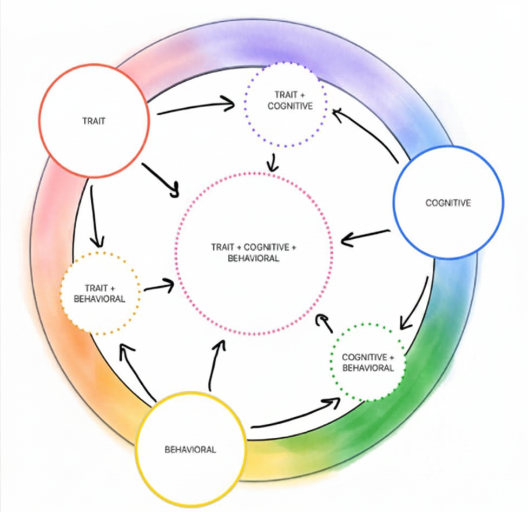
Clinging to the standard qualitative analysis metaphor added weeks to my dissertation timeline.
By finally leaning into my strengths instead of trying to force myself into the systems and practices that weren’t designed for me, I finally found my way.
And! When my advisor saw my octopuses, he gave me the research jargon that fit my intuitive reading of my findings: second- and third-order interactions.
Amazing what can happen when you finally get the information out of your brain and into a format others can access...
This journey of discovery became the basis for the group I co-led with Dr. Aaron Flicker at the 2024 American Evaluation Association Annual Conference: Embracing Neurodivergent Evaluators: Lessons Learned from Cephalopod-Based Coding Solutions
